

Why There Is No Such Thing as a "Complete" Hawaiian Pidgin Dictionary
If you walk into a bookstore in Honolulu, you might find a few small paperbacks claiming to be "The Ultimate Pidgin Dictionary." They are fun souvenirs, but if you actually try to use them on the street today, you will run into a problem: half the words are missing, and the other half have already changed meaning.
People often ask us, "Why isn't there one definitive, official book that lists every Pidgin word?"
The answer is simple: Hawaiian Pidgin (Hawaiian Creole English) moves too fast for paper to catch.
A Language That Refuses to Stand Still
Unlike Latin or ancient Greek, Hawaiian Pidgin is a living, breathing creature. It was born on the sugar plantations of the 1800s, a survival tool forged by Native Hawaiians, Chinese, Japanese, Portuguese, and Filipino laborers who needed to understand one another.
Because it was built by borrowing, it never stopped borrowing. A dictionary printed in 1990 is a time capsule of that generation's slang. It won't help you understand the words being invented by local teenagers in Kalihi today, nor will it explain the words being reclaimed by cultural practitioners.
To claim a dictionary is "complete" is to claim the culture has stopped growing. At Da Pidgin Dictionary, we believe the only accurate resource is one that evolves with the people.
Case Study: The Evolution of "Māhū"
Nothing illustrates the need for a living dictionary better than the word Māhū. If you looked this word up in three different decades, you would get three different definitions.
A static book might only tell you the slang definition, but a living resource can track the full arc of the word as it is officially recognized today:
The Ancient Meaning (Respected): As defined by the Hawaii Department of Human Services today, Māhū historically referred to a "third gender", individuals who embodied both male and female spirits. In pre-Western Hawaiʻi, they were respected figures who served vital roles as "healers, caretakers, teachers of ancient traditions, and guardians of sacred knowledge".
The "Street" Meaning (Derogatory): Throughout the mid-20th century, Western influence suppressed this cultural context. On playgrounds and in casual conversation, the word shifted into a slur, often used to mock gay men or anyone acting effeminate.
The Modern Meaning (Official): Today, the word is shifting again. The State of Hawaii now explicitly includes Māhū in its official LGBTQIA+ glossaries, restoring the definition to its original dignity. It is no longer just a "slang" word for the street; it is a recognized cultural identity that honors those who hold "traditional spiritual and social roles" within the community.
Only a live, updating resource can capture this nuance, telling you that while you might hear it used as an insult on the street, the official and cultural reality is one of respect.
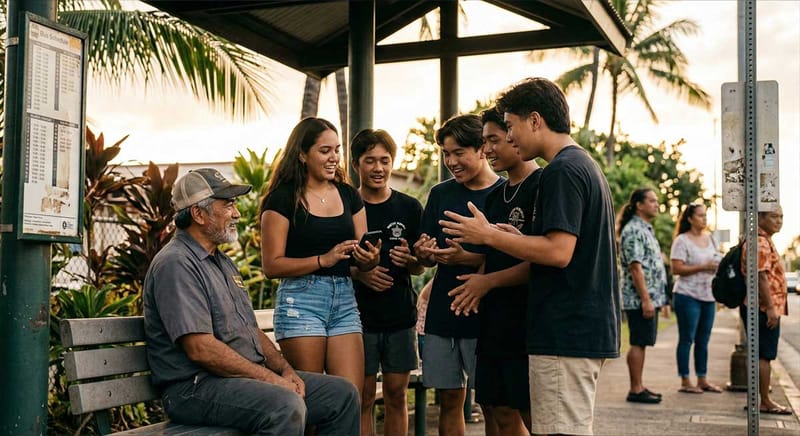
From Math to Music to Identity: The Story of "Hapa"
Consider the word Hapa.
Originally, it was just a loanword from the English "Half," used for numbers or fractions.
Then, it became a music genre. "Hapa Haole" (Half White) music described Hawaiian melodies sung with English lyrics in the early 1900s.
Now, it is an identity. It has evolved into a term of pride for anyone of mixed ethnic heritage, shedding the stigma of older terms like "half-breed."
If your dictionary doesn't trace that arc, it isn't telling the full story.
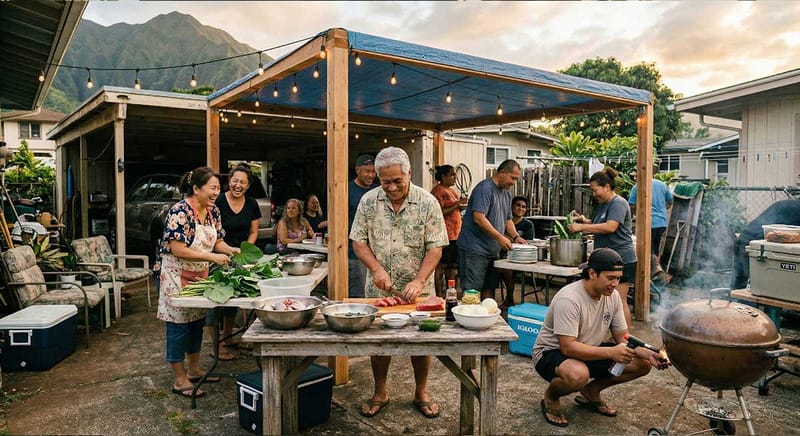
Why We Built Da Pidgin Dictionary
We realized that a definitive resource couldn't be a monologue; it had to be a conversation.
Da Pidgin Dictionary aims to be the most current resource in the world because we don't just "publish" words, we track them.
We document the shifts: When a word moves from an insult to a badge of honor, we update the entry.
We capture the sound: You can’t learn Pidgin just by reading. The meaning of a sentence often changes based on the inflection. That’s why we provide audio pronunciations, something a book can never do.
We are community-driven: Just like the plantation workers who created the language, our users contribute to its future.
Pidgin is the heartbeat of Hawaii. It changes every day. Your dictionary should, too.
Original archival photos courtesy of the Library of Congress. Colorized and enhanced.